Align
Creating a shared design language for AI at Align
I built a shared AI design language so Align’s products stay consistent without looking the same.
- 6+Products audited
- 8Component specs documented
- 5AI interaction patterns defined
Align needed a shared language for AI
As teams began exploring AI across different products and platforms, foundational experience decisions were being made independently.
There was no shared guidance for questions such as which AI icons or badges to use, how thinking and streaming should behave, how generated information should be presented, or what language should communicate AI behavior.
This created a need for a flexible system that could improve consistency without prescribing the same interface for every product.
What I did
I created an AI experience guide that helps product leaders, designers, product managers, and developers design more consistent AI experiences across Align’s product ecosystem.
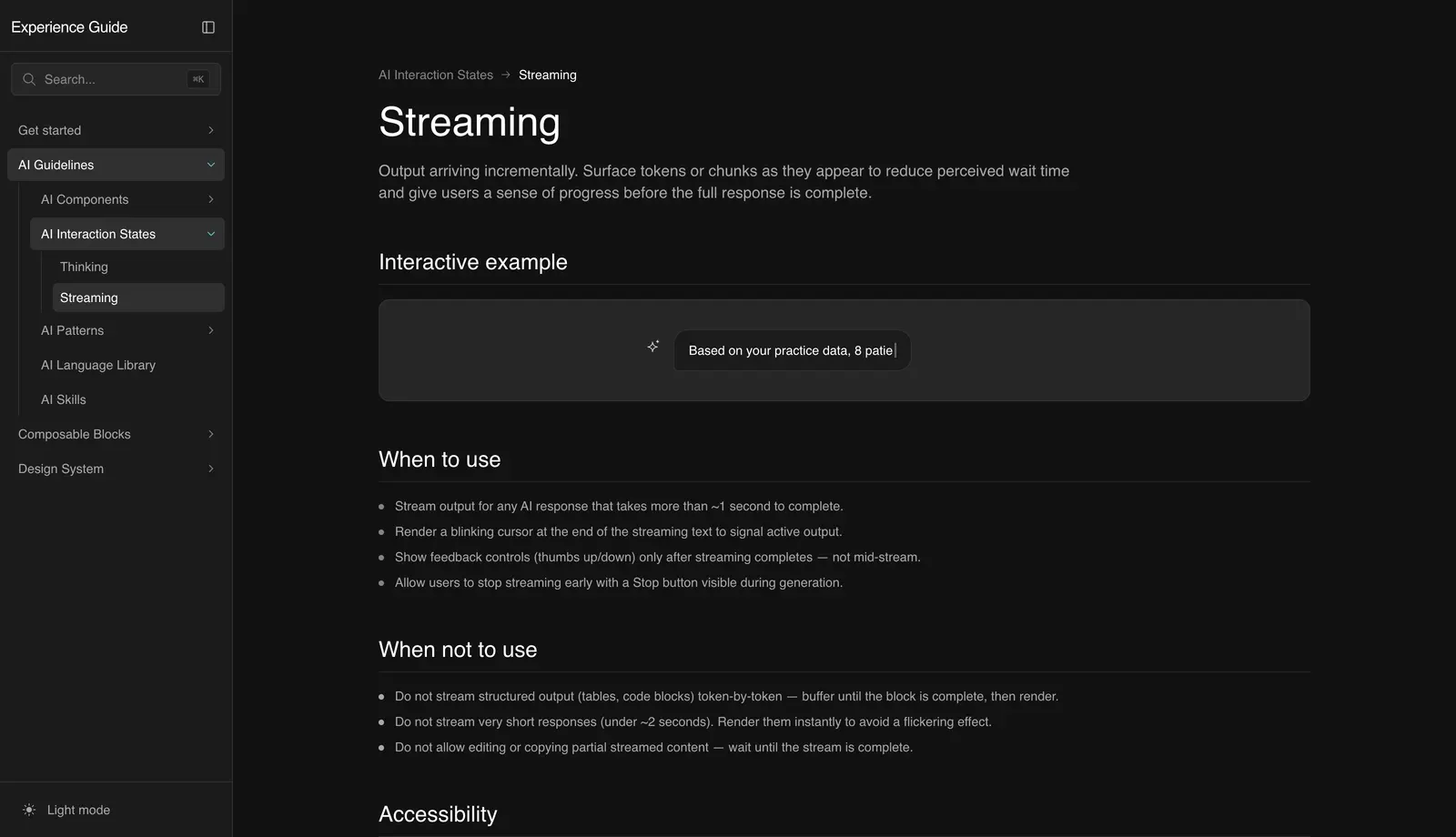
Defined reusable AI components, interaction states, patterns, and language guidance, then built an interactive experience guide using Claude Code.
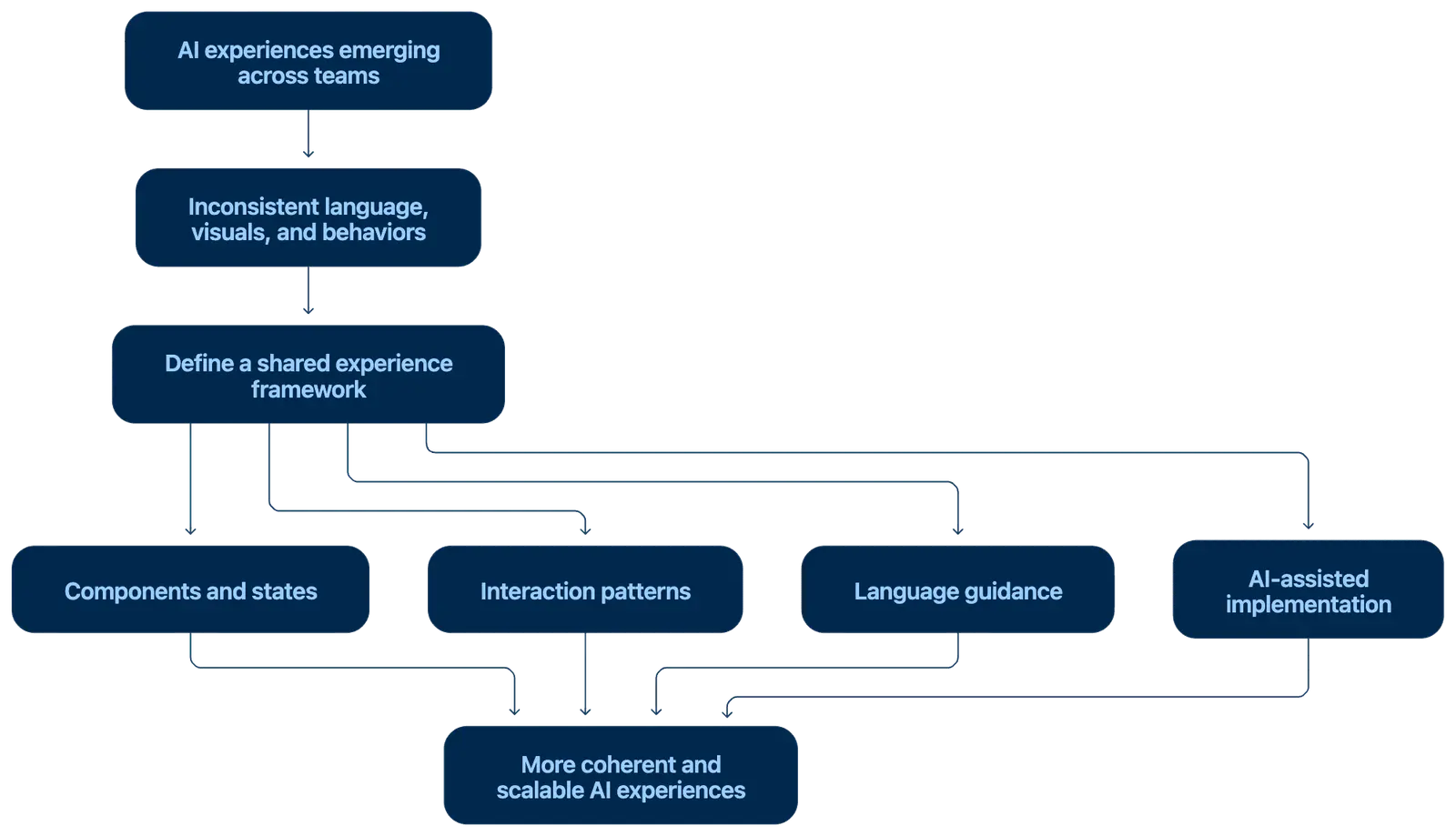
A system spanning visuals, behavior, patterns, and language
I reviewed AI experiences being explored across Align’s platforms and identified the decisions that would benefit from shared conventions.
I organized the guidance into four connected layers:
Components
Icons, badges, and reusable interface elements that make AI recognizable.
Interaction states
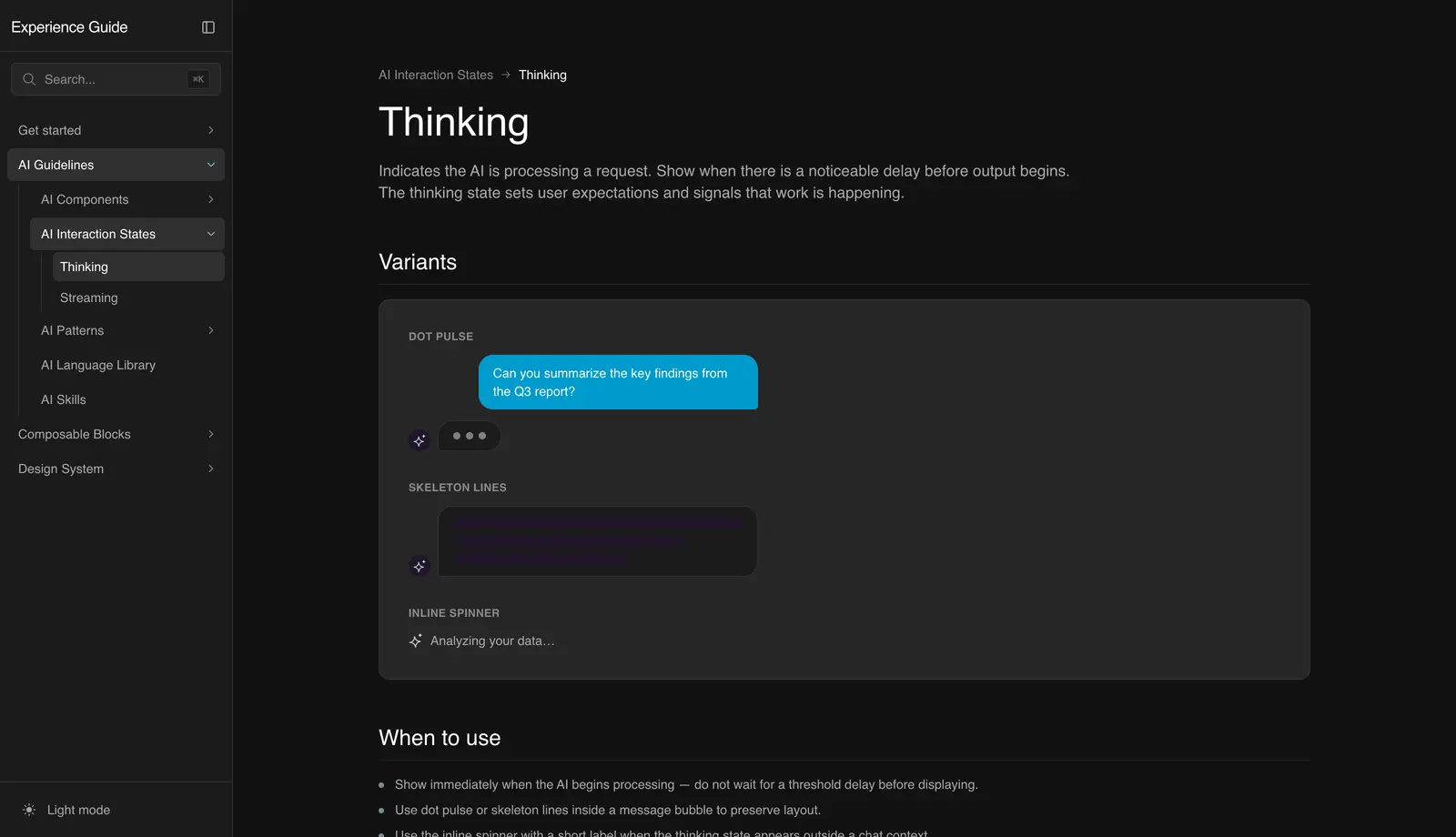
Thinking, streaming, loading, completion, and recovery across the AI response lifecycle.
AI patterns
Reusable models for conversation, search, recommendations, and explainers.
Language
Shared terminology and reusable copy for clear, consistent AI communication.
Together, these layers give teams a common starting point while leaving room for each product to adapt the guidance to its users and context.
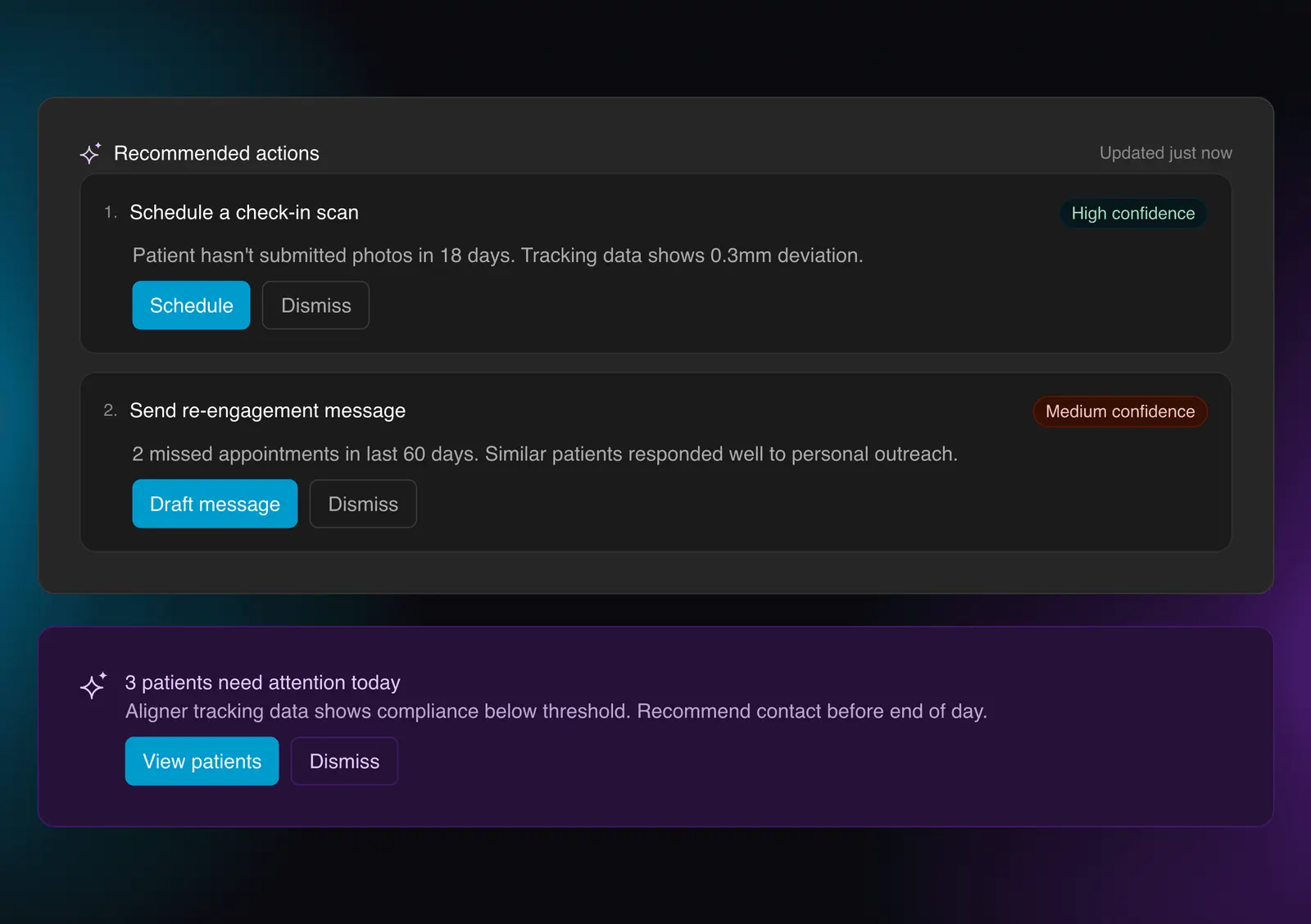
Turning the framework into an interactive resource
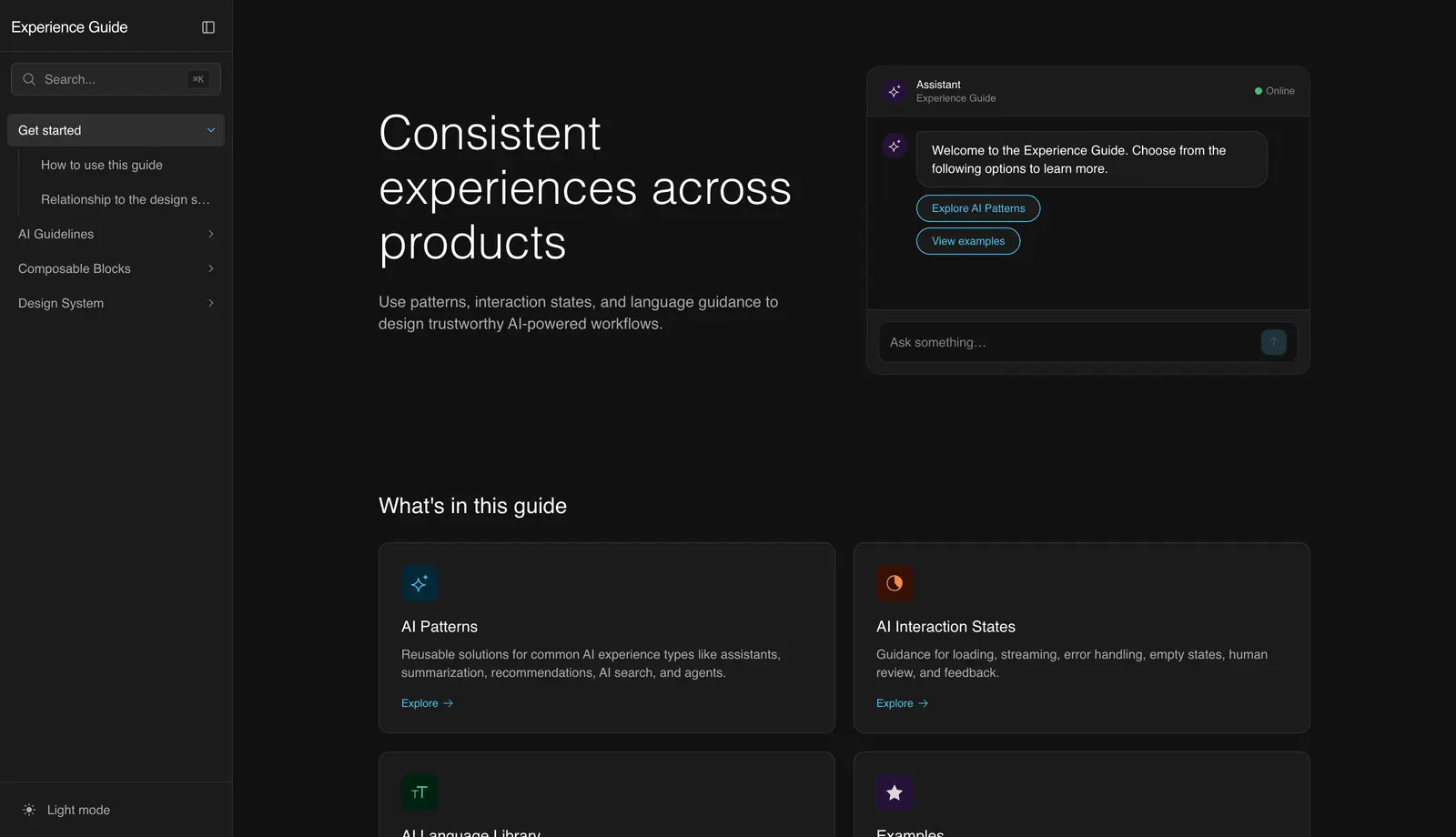
I designed and built the guide using Claude Code, transforming the framework into an interactive resource rather than a static collection of documentation.
The guide brings examples, usage guidance, interaction behavior, and language recommendations into one place. Building it in code also allowed me to evaluate patterns in context and explore a closer connection between design guidance and implementation.
I also began translating the AI language library into a reusable skill for tools such as Claude Code and Replit. The goal is to help teams apply pre-approved AI language within the tools they already use, reducing the gap between documentation and execution.
Creating a foundation for consistency at scale
Defined and built a shared AI design language for how AI should look, behave, and communicate across product, design, and engineering.
The AI experience guide was designed to give cross-functional teams a clearer starting point for incorporating AI into designs, make inconsistencies easier to spot, and reduce duplicated decisions.
The work also creates a foundation that can evolve beyond documentation toward guidance embedded directly within design and development workflows.